The ongoing obsession with health and wellness sometimes feels like it’s taken over every aspect of daily life.

It’s intrinsic to the fitness and beauty industries, and shows up at the grocery store as trendy superfoods and supplements. Even our technology reminds us to look after our well-being by switching over to the sleep-protecting yellow glow known as “night shift.”

In this five-part series, we sort through the noise to offer advice on tried-and-true ways to boost mental and physical well-being right at home. That includes gyms that go beyond a treadmill and some free weights to address muscle repair, and we have tips for building home spas without the snakeoil.

We also cover how to build a bedroom and light up a home in a way that protects our all-important circadian rhythm and sleep, and how to harness the healing power of nature in our home decor.

Lights, Water, Relaxation: How to Create the Perfect Home Spa

A home spa can be life changing, said Linda Hall, an international spa and wellness consultant. Anyone who’s had the chance to relax in a five-star luxury spa on holiday probably has an inkling of what she meant, but for those with enough money and space to incorporate a spa into their own homes, “the health and well-being benefits are just endless,” she said.

“A spa is all about the reconnection back to self. It’s about that feeling of being nurtured, warm, safe, connected,” she said. “If you’re lucky enough to have a home spa then you’ve got that experience every day when life is tough or life is challenging…Read More

Photo: Rodnae Productions / Pexels


Designing a Bedroom for Sounder Sleep

The bedroom is the ultimate sanctuary. It’s the place where (hopefully) the rest of the world fades away and we drift into a blissful dreamland.

Encouraging relaxing vibes has as much to do with the things we place in the room as it does with the overall design, especially the technology we have within reach—often the less, the better…Read More

Photo: Getty Images


Biophilic Design Is the Ultimate Holistic Approach to Home Wellness

Since people have an intrinsic desire to be outdoors to reap the benefits of nature, it’s no surprise that biophilic design continues to gain ground as an aesthetic with human wellness at its core.

The theory––which has evolved into a movement––might be in the spotlight these days, but it isn’t a fad. On the contrary, biophilic design has been around for decades. In 1973, German-born American Erich Fromm detailed biophilia as “the passionate love of life and of all that is alive.” And biologist and Harvard research professor E.O. Wilson’s 1984 book, “Biophilia,” states that humans are attracted to nature and need to feel connected to it…Read More

Photo: CookFox


Tuning Home Lighting Into Your Circadian Rhythm

You’ve likely heard the term circadian rhythm, particularly surrounding the sleep-wake cycle. It’s essentially the body’s internal clock that’s cued by light or lack thereof.

Our bodies naturally rely on the sun’s rising and setting patterns to dictate when we sleep and when we wake. Generally, when the body’s circadian rhythm is in sync, the sleep-wake cycle is restorative. But when it’s not, sleep can be troublesome…Read More

Renderings: BIOS Lighting


 Home Gyms Get Holistic

After strength training, you recline on an infrared therapy bed then opt for time in the hyperbaric chamber to optimize muscle repair.

You’re not at a swish spa or flashy fitness facility. You’re home, and these state-of-the-art treatments are becoming components of high-end personal gym setups…Read More

Renderings: Fitness Design Group


London’s Latest Developments Include Historic Dockyard Conversions and New York-Style Lofts

Spring has arrived in London and with it the promise of a busy housing market.

In the prime-housing market, developers are putting their best foot forward as they launch an array of new homes, ranging from glass high-rise aeries to period lateral flats. They hope to impress increasingly discerning and savvy buyers from around the globe, with good design, common spaces and gardens, and diverse amenities.

But what’s in store for the capital’s top-end market in 2023…Read More


Modern Tech, Resort-Style Amenities and Views Are Back on Trend in Australia

Any negativity around living in high-density dwellings in Australia during the height of the pandemic has been replaced by the desire for cutting-edge design, exceptional views and glamorous interiors.

These aren’t cookie-cutter condos, instead they feature five-star concierge services, private plunge pools and unique floor plans often larger than a typical Australian house.

With low supply of prestige property in almost every corner of the country, and a continued flow of foreign and returning expat investment into Australia, the upper end is weathering the storm better than the wider market…Read More

Credit: Sammut Group

The dream of homeownership is a significant milestone in many people’s lives, representing stability, investment, and a place to call your own. In the vibrant and diverse landscape of Southern California, this dream takes on a unique flavor. However, the current real estate market in this region can be both exciting and challenging, particularly for first-time home buyers. In this guide, we will take you on a journey through the process of purchasing your first home in Southern California’s dynamic market.

Understanding the Southern California Real Estate Landscape

Before embarking on your home buying journey, it’s crucial to grasp the current state of the Southern California real estate market. Factors such as supply and demand, economic trends, and local developments play a significant role in shaping the market’s dynamics. Being well-informed about the market’s conditions will empower you to make educated decisions and navigate potential challenges.

Financial Preparedness and Mortgage Exploration

Determining your financial readiness is a fundamental step in the home buying process. Assessing your budget, evaluating your credit score, and exploring down payment assistance programs can help you gain a clear understanding of your financial standing. Additionally, diving into the world of mortgages, understanding various loan options, and getting pre-approved will give you the confidence to explore homes within your price range.

Choosing the Ideal Location

Southern California offers a vast array of neighborhoods, each with its own character, amenities, and lifestyle. Deciding where to buy involves considering factors such as proximity to work, schools, transportation options, and community amenities. Researching neighborhoods thoroughly and aligning your preferences with your budget will guide you towards the ideal location for your first home.

Exploring Properties and Real Estate Professionals

Once you’ve established your budget and location preferences, it’s time to dive into the exciting process of exploring properties. Whether you’re interested in a newly constructed home or a resale property, enlisting the services of a qualified real estate agent is invaluable. M Coastal brings local expertise, market insights, and negotiation skills to the table, ensuring that you find a property that meets your needs and fits your budget. Contact us today to learn more about how we can help!

Crafting Offers and Negotiating Effectively

As you identify properties of interest, you’ll step into the realm of crafting offers and negotiating with sellers. This phase requires careful consideration, as it involves not only the purchase price but also contingencies, repairs, and other terms of the deal. Effective negotiation strategies can make a significant difference in securing the home you want while staying within your budget.

Navigating Escrow and Closing

Once your offer is accepted, you’ll enter the escrow period, a critical phase that involves various steps to finalize the transaction. Activities such as property inspections, title searches, appraisals, and securing homeowner’s insurance are essential components of this process. Understanding these steps and collaborating closely with your real estate agent will ensure a smooth journey towards closing the deal.

Transitioning to Homeownership

Closing the deal is an exciting accomplishment, but it’s not the end of your journey. Transitioning to homeownership involves tasks such as transferring utilities, familiarizing yourself with neighborhood services, and preparing for the move. Taking these steps will help you settle into your new home comfortably.

Buying your first home in Southern California’s ever-evolving real estate market is a significant achievement. While the process may seem complex, each step brings you closer to turning your homeownership dream into reality. By understanding the market, being financially prepared, making informed decisions, and seeking professional guidance, you can confidently navigate the challenges and seize the opportunities presented by Southern California’s real estate landscape.

Southern California, a region renowned for its idyllic coastal landscapes, vibrant cities, and a lifestyle synonymous with luxury, offers an extraordinary array of upscale properties for discerning buyers. In this blog post, we will explore the captivating luxury real estate market in Southern California, highlighting its unparalleled beauty, thriving market dynamics, and the abundance of opportunities it presents for those seeking an opulent lifestyle.


Coastal Splendor and Breathtaking Landscapes:
Southern California’s luxury real estate market flourishes amidst an enchanting backdrop of sun-kissed beaches, majestic mountains, and lush valleys. The region’s pristine coastal areas, including Malibu, Newport Beach, and La Jolla, are home to exquisite beachfront properties with panoramic ocean views and private access to sandy shores. For those seeking a tranquil retreat, the region’s sprawling estates nestled in the Santa Ynez Valley or the scenic Santa Monica Mountains provide a haven of natural beauty and privacy.


Architectural Masterpieces and Innovative Designs:
Luxury homes in Southern California showcase exceptional architectural styles, from Mediterranean-inspired villas to sleek contemporary marvels and historic estates. Renowned architects have left their indelible mark on the region, creating homes that seamlessly blend opulence and elegance with the unique charm of the area. Custom features, cutting-edge technology, and sustainable design principles converge to offer residents an unparalleled living experience.


World-Class Amenities and Experiences:
Living in Southern California’s luxury properties guarantees access to an exceptional array of amenities and experiences. Private infinity pools, meticulously landscaped gardens, private theaters, and wine cellars are just a few of the luxurious features found within these homes. Additionally, the region boasts a plethora of recreational opportunities, from exclusive golf courses and marinas to world-renowned spas and upscale shopping districts. With an unparalleled dining scene and a vibrant cultural landscape, residents can indulge in the finest experiences Southern California has to offer.

Thriving Market Dynamics and Investment Potential:
The luxury real estate market in Southern California is marked by robust growth and unwavering demand. The region’s global appeal attracts affluent buyers from around the world, seeking to invest in prime properties that offer both prestige and long-term value. Southern California’s strong economic foundation, driven by industries such as entertainment, technology, and finance, ensures a stable and prosperous environment for real estate investment.


Night falls after the sun sets in southern California and LA

Unmatched Lifestyle and Urban Sophistication:
Southern California embodies a unique lifestyle that seamlessly blends laid-back coastal living with cosmopolitan sophistication. Whether residing in the vibrant heart of Los Angeles, the exclusive enclaves of Orange County, or the cultural haven of San Diego, residents have access to a diverse range of entertainment, fine dining, high-end shopping, and world-class cultural events. The region’s temperate climate, picturesque surroundings, and thriving social scene create an unparalleled quality of life.


The luxury real estate market in Southern California epitomizes opulence, offering an extraordinary fusion of natural beauty, architectural brilliance, and a lifestyle coveted by many. With its stunning coastal vistas, innovative designs, and an abundance of amenities, the region is a magnet for affluent buyers seeking to immerse themselves in Southern California’s distinctive blend of elegance and relaxation. As demand remains strong and the market thrives, there has never been a better time to explore the remarkable opportunities that await in Southern California’s luxury real estate market.

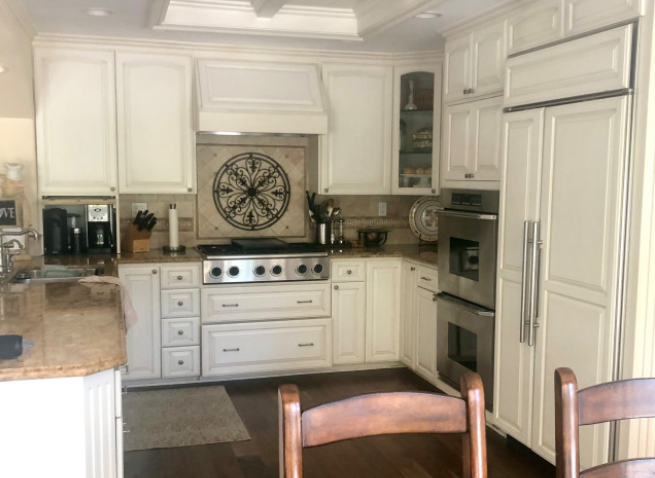
The kitchen of this empty-nest couple featured some nice traditional details: raised-panel cabinets, ogee-edge granite countertops, a tray ceiling and an arched architectural feature over the peninsula. But taken together in the tight U-shaped layout, the result was a space that looked like it had a bit too much going on.

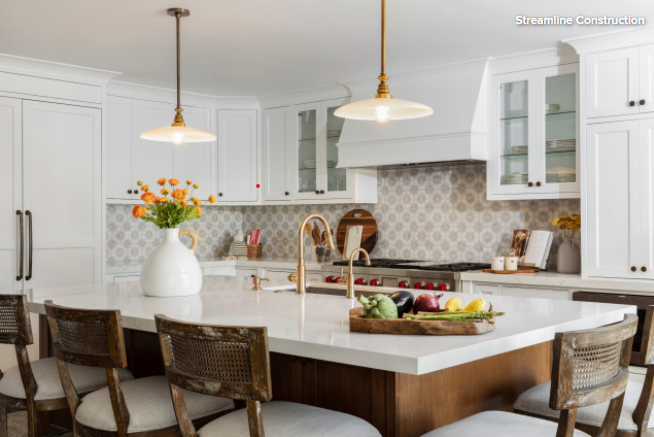
In search of a more streamlined look with an updated classic style and an island, the couple gathered inspiration photos on Houzz and then hired designer Olga Dean and builder Jason Adams. The remodeling team created an L-shaped layout with a central island. New crisp white Shaker-style cabinets and a marble tile backsplash in a lively pattern bring a fresh take on tradition. A stained wood island adds warmth and complements the existing walnut flooring. And a hidden baking center is a fun and functional surprise.

Before: The former kitchen was pretty enough with its creamy white cabinets, beige backsplash tile and beige granite countertops. But an abundance of little details — like the raised-paneled cabinets, ogee countertop edge, tray ceiling and band of backsplash tile — gave the space a busy look. “She had that tray ceiling, and we thought about keeping it but decided to take it out and not draw attention to the ceiling’s 8-foot height,” Dean says.

Plus, the U-shaped layout with a peninsula on the left squeezed the cabinet storage together while leaving a lot of open floor space to navigate. “It really bothered her that she had a peninsula,” Dean says. “She really wanted an island. She wanted the extra seating and continuity of an island.”

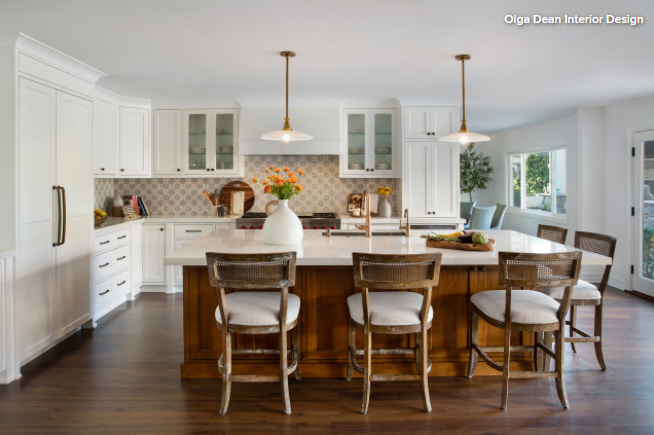
After: The remodeling team knocked the kitchen back to the studs and eliminated the recessed section of the ceiling. It also removed the peninsula, the arched architectural detail above it and a support post, replacing the latter with a structural steel beam in the ceiling.

The team relocated the refrigerator and replaced the former separate cooktop and wall oven arrangement with a 48-inch dual-fuel range. The cabinets are now in an L-shaped layout, and the new 9½-foot stained maple island offers seating for five.

Simplified white Shaker-style cabinets (Warm White by Dunn-Edwards), 6-by-6-inch patterned Carrara Blanco marble backsplash tile and marble-look quartz countertops provide an updated look on traditional style. “She’s incredibly traditional, and I had to encourage her to get outside of her comfort zone,” Dean says. “At first she wanted it all white, but going with the two-tone kitchen achieved her design goals of staying with a traditional look but with a fresh twist.”

The range with six burners and infrared griddle sits on the wall that formerly held the refrigerator. “We placed the range in the new location so it would have more visual prominence with the hood and backsplash,” Dean says.

The wood island base complements the walnut floor, which together anchor the room with warmth. The back of the island has storage for infrequently used items.

A pair of 15-inch pendant lights with white glass dish shades hang above. “We wanted something that was light and fresh but also didn’t want to draw attention to the 8-foot ceiling,” Dean says.

The pendants have a hand-rubbed antique brass finish that coordinates with the distressed antique brass finish for the cabinet knobs and pulls and distressed French country-inspired stools.

The kitchen also has undercabinet light strips and new LED recessed lights in the ceiling. (The latter were removed from these photos by the photographer to help focus attention on other design details.) “There are also puck lights inside the glass-front cabinets,” Dean says. “Those look so pretty at night.”

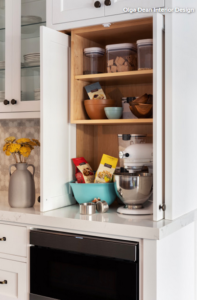
To the right of the range, the baking center behind retractable doors has room for a stand mixer and other supplies. “She wanted an appliance garage at first, but I wanted to add height to the cabinetry and suggested a baking center,” Dean says. “It’s something she absolutely loves, with those doors that retract into the cabinet.”
A 24-inch stainless steel microwave drawer sits below.

The interior side of the island features paneled dishwasher drawers and a paneled trash and recycling center.


Before: This photo of the former kitchen shows the obtrusive arched architectural detail over the peninsula, as well as the support post at the end.

In the rear, a narrow doorway connected the kitchen to the formal dining room, leaving a nook with a bank of corner cabinets that broke up the flow of the home.

After: Dean extended the kitchen into the former nook space and removed the corner cabinets to establish a more open connection to the dining room.

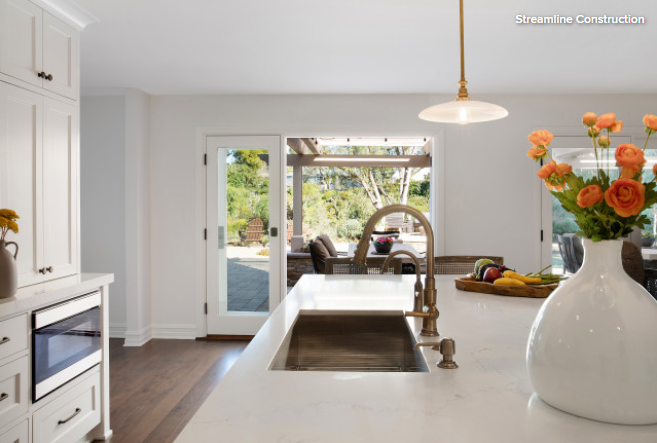
This view also showcases the new 33-inch stainless steel undermount sink in the island and the pull-down faucet in a gold finish that slightly deviates from other metals used in the kitchen. “I’m a lover of mixed metals,” Dean says. “The key is to have them complement one another.”

An existing single glass door and double French doors connect the kitchen to the back patio with a pool, cabana and view of rolling hills.

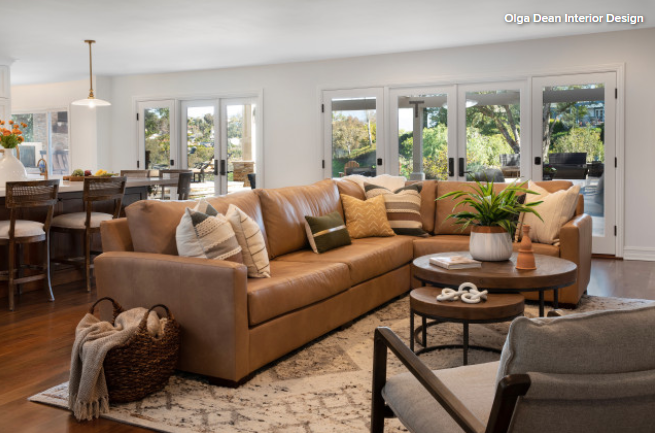
The kitchen also opens to this family room, which features a large camel-colored sectional and ample natural light thanks to multiple glass doors. “We updated the entire space so it now feels fresh and inviting,” Dean says.

Wondering if it’s time to hire a general contractor? These pros are experts at managing all aspects of a project, including applying for building permits, hiring subcontractors, overseeing work and cleanup, and more. If you’re thinking of undertaking a major home improvement project, remodel or new build, a general contractor will likely be a key member of your team. Here are 10 times it makes sense to work with a general contractor to help your project run smoothly.

General Contractor vs. Specialized Contractor

A specialized contractor is a pro with a single specialty area of practice, like electricians and plumbers. A general contractor (GC), on the other hand, oversees all on-site aspects of a construction project, including the work of any specialized contractors. The GC is your point person — the one with a bird’s-eye view of the entire project and the person you call about everything related to the project.

1. You’re Ready to Implement an Architect’s Plans

If you’ve been working with an architect to design a custom home, once the plans have been finalized it’s time to find a contractor who can bring the design to life. It’s important that these pros work well together, so if your architect suggests contractors he or she has worked with before, it’s a good idea to consider getting bids from them. But even if you do go with one of the contractors your designer suggests, don’t neglect to do your own due diligence — check references, ask to see past work and double-check that he or she is insured.

2. You Want to Exercise Your Design Chops

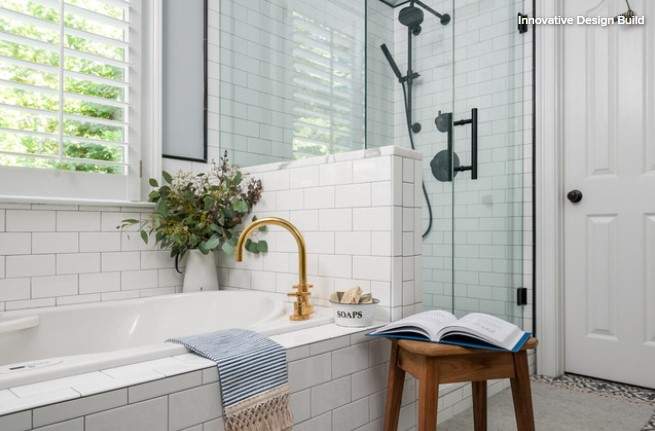
This certainly isn’t the case for all homeowners, but for a certain design-savvy subset — like Houzz contributing writer Becky Harris, whose remodeled bathroom is shown here — taking on a (relatively) small design project with the help of a general contractor is an exciting proposition. Working with the pros at Innovative Construction, Harris selected her own fixtures and finishes to transform a ho-hum bathroom into a light and lovely space.

Tip: If you’re planning to go right to a general contractor without hiring a designer, it’s a safer bet if you’re keeping most elements in the same place. In other words, the more complexity involved, the likelier you’re going to need to bring a designer on board.


3. You’re Making Changes to Your Kitchen

Anytime you know you’ll be needing multiple pros at work on a single project, it’s usually worthwhile to hire a general contractor to oversee and coordinate the project. In a kitchen, for example, pretty much any work that goes beyond altering a single element (like replacing appliances) will require multiple pros, including a plumber, an electrician and a carpenter or cabinetmaker. Your general contractor can maintain the larger vision for the space (including a kitchen designer’s plans, if you’re using them), hire and oversee subcontractors, schedule the work and maintain the site.

4. You Want a Simple Addition

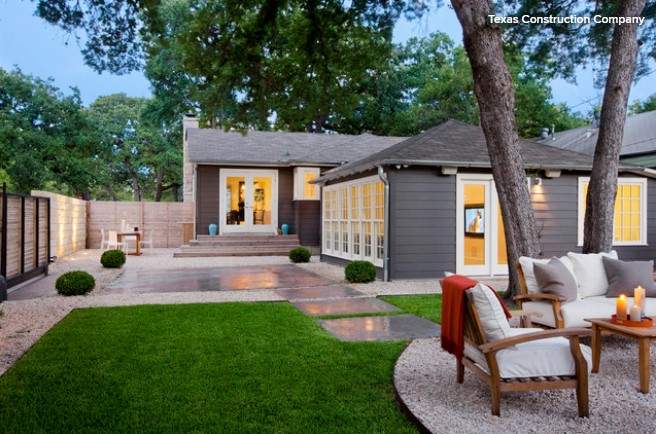
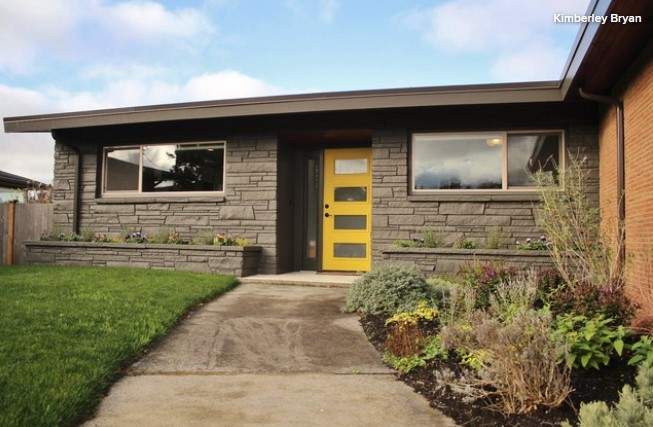
In some cases, you may want to hire an architect to create a plan for an addition that integrates seamlessly with the rest of your home before hiring a general contractor. But in other instances a contractor who specializes in additions can take the lead. Ranch houses, like the one shown here by Texas Construction, are especially well-suited to easy additions because of their horizontal layout and single-level living. A contractor can obtain a building permit and build your addition to code.

5. You Need to Restore After a Fire, Flood or Storm

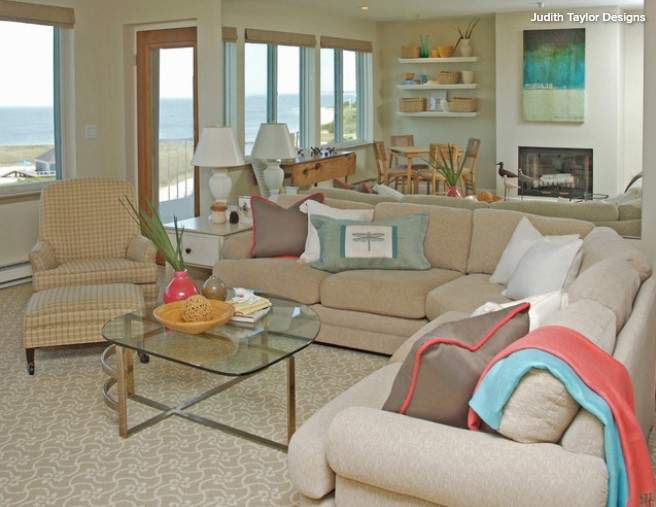
When the Cape Cod, Massachusetts, condo of interior designer Judith Taylor was flooded during a nor’easter, the entire interior was damaged, necessitating a top-to-bottom restoration. From installing new drywall and doing electrical repairs to replacing the floors and repainting, the work after an event like this can be extensive. A general contractor can be your point person to see you through the process of getting your home in shape so you can move back in.

6. You Want to Make Structural Changes to Your Home

Hoping to knock down a wall and open up your space? You may choose to hire a designer or an architect to do the design work if there’s more to it than that, but if what you have in mind is pretty straightforward, your best bet for getting started is probably a general contractor. This pro, once you’ve found the right one, can help coordinate all of the work, from having a structural engineer assess the space to overseeing the construction and electrical work.

7. There’s a Safety Issue That Needs Addressing

It may be tempting to hire a handyperson for what seems like a small job, but if the safety of your family and guests is at stake, it’s critical to bring in a pro who knows the building codes and can complete the work with safety in mind. Whether it’s a deck that has rotted out and needs to be replaced, a faulty railing or wobbly steps, take the issue seriously and hire an experienced contractor to oversee the work.

8. You’re Done With DIY

If you’ve bitten off more than you can chew with a DIY home improvement project, it’s important to know when to hang up your (hard) hat and call in a pro. A general contractor can help guide your project to completion, no matter what stage it’s in.

9. You Need Permits

Whether you’re putting in a new fireplace, modifying the roofline of your home, or doing any number of other projects, if you need permits, that’s a good sign that you could use a general contractor. General contractors are well-versed in local building codes and ordinances, and can apply for any permits your project requires.

10. You Bought a Fixer-Upper

If you bought a fixer-upper, chances are there’s enough work on your docket to keep a contractor busy for a good long while. When Peggi and John Fu purchased the home shown here, they knew that picking the right contractor would be key to getting all of the necessary work done on a tight timeline. The couple went with Slater Construction because the contractor was open to using materials they sourced themselves. Even on a small budget and tight schedule, they were able to transform what was a warren of small rooms and hallways into a light and bright home still in keeping with the midcentury feel of the neighborhood.


This article was originally published on houzz.com

Let’s face it, some colors and materials clash while others seem like a match made in heaven. In a kitchen, where large planes of cabinets, countertops, backsplash and flooring carry a lot of visual weight, getting the mix right is especially important. Here are five gorgeous design and remodeling projects that pro shared details on, including the materials and tones they used to create stylish combinations.

1. Light Gray, Wood and Gold

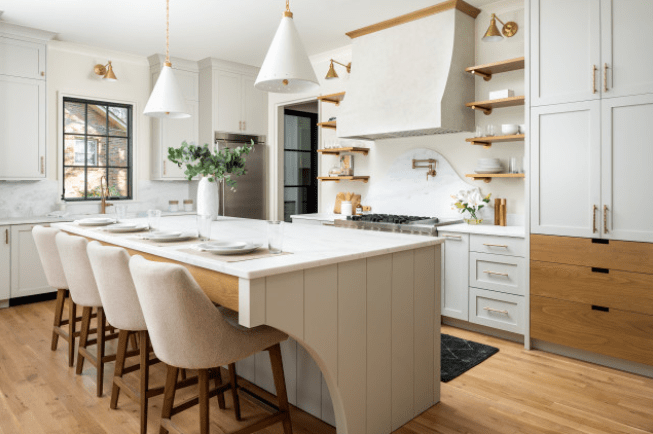
Homeowners’ request. “Clean lines, a subdued color palette and understated elegance and craftsmanship,” Woodshop QC cabinetmaker Charlie Henderson says.

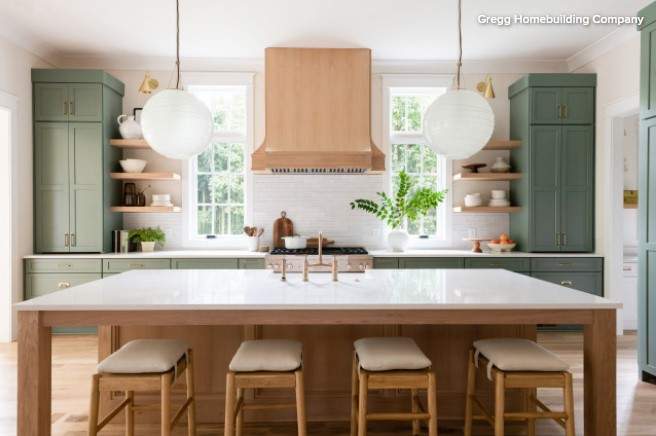
Color and material combo. Shaker-style cabinets with slab-front top drawers in soft gray paint (Gray Owl by Benjamin Moore). Solid white oak accents in a custom pecan stain. Marble countertops and backsplashes. Brass fixtures and hardware.

Other special features. Vertical shiplap island detailing. Custom plaster range hood. Solid white oak floors in a custom stain.

Designer tip. “Rhythm, like in music, creates cadence in your design while also engaging the viewer,” Henderson says. “Notice the repeating soft curves on the simple cove crown molding, the front swoop on the range hood and the island end panels.”

“Uh-oh” moment. “Originally we had designed upper cabinets flanking the range hood, but it all just felt too cramped,” Henderson says. “We wanted the textures and lines of the range hood and backsplash to really stand out, but the uppers were both imposing and distracting. After some consideration, we had the idea to go with the metal wall-mount brackets and open shelves. This then allowed us to incorporate both the white oak and brass that we were using elsewhere.”

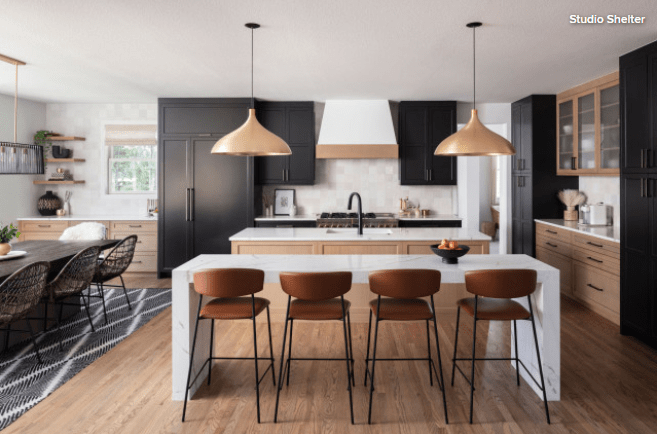
2. White, Wood, Black and Gold Metal

Homeowner’s request. “The client is an Instagram influencer who uses the space to demonstrate products and wanted a fresh and stylish place to do so,” says designer Kelly Flynn, who used Houzz ideabooks to collaborate with her client. “The flow for cooking was also not ideal, so we brought the refrigerator closer to the work area for easy access. Using the space on the opposite wall for the pantry and coffee bar made the area feel larger and better used. There was also a lot of underused space in the kitchen, so we were able to add two islands, which is terrific for entertaining. We converted an unused desk space into a bar with a wine fridge.”

Color and material combo. Custom stained white oak cabinets and black cabinets (Black Magic by Sherwin-Williams). Calacatta-marble-look quartz countertops. White zellige-style backsplash tile. Red oak flooring. Black, gold and silver metal details. “Having several metals keeps the space versatile, while the combination of colors for the cabinets and countertops keeps the space fresh yet bold,” Flynn says.

Designer tip. “It’s really important to take the cabinets up to the ceiling,” Flynn says. “The look is far more complete and updated-looking.”

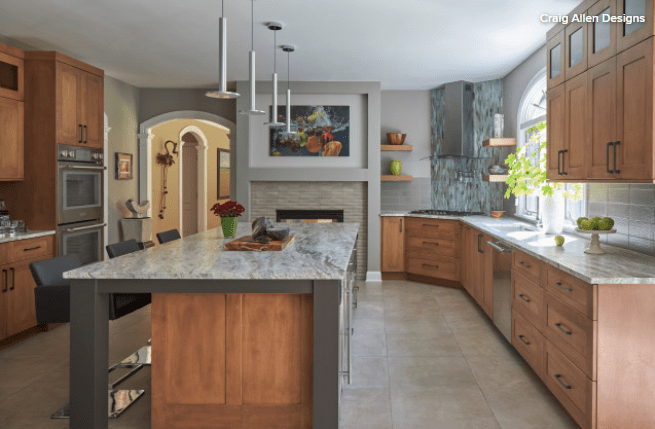
3. Wood, Brown, Green and Mixed Metals

Homeowners’ request. A contemporary-transitional kitchen with a zen-like atmosphere. The homeowners disliked having their cooktop on the island, so designer Craig Teitsma, whose clients found him on Houzz, took out some cabinets to the right of the fireplace and created an angled wall that now supports a cooktop and vent hood.

Color and material combo. Light-stained maple. Shaker-style cabinets. Deep, dark brown slab drawers and other details on the island (color based on Dragon’s Breath by Benjamin Moore). Fantasy Brown quartzite countertops. Gray walls (Stone Harbor by Benjamin Moore). Sage green textured glass backsplash tile with shimmery diamond-shaped backsplash tile behind the range. Beige porcelain floor tile. Stainless steel appliances. Oil-rubbed bronze cabinet hardware on the perimeter. Satin nickel hardware on the island.

Other special features. Geometric 3D tile fireplace surround.

Designer tip. “Don’t be afraid of different colors, textures and patterns,” Teitsma says. “Too many people just do a ‘safe’ white kitchen with a subway tile backsplash and a marble-look quartz countertop. And while this is beautiful and timeless, it can also be a little boring. If there is a color, texture or pattern that you see in a tile store or cabinet store that you like, implement it into your space. I don’t think you will regret it.”

“Uh-oh” moment. “Finding just the right stain color was a trick,” Teitsma says. “We found a stain we liked from another cabinet manufacturer that I use, so we had my higher-end line match it. Well, the first three matches that we got back were not quite right. Too red. Too yellow. Too green. Finally we got the right color and had a larger sample made up on a door for us to see it at scale. Approved. But when the cabinets came, the color came in darker than expected. Oh boy. I told the homeowners to let me continue installing the cabinets so that we can see it all put together, step back and have a complete picture of how it is going to look. Once we finished the install, we felt that the color was at the least acceptable, and some of us liked the color even better than the original sample.”

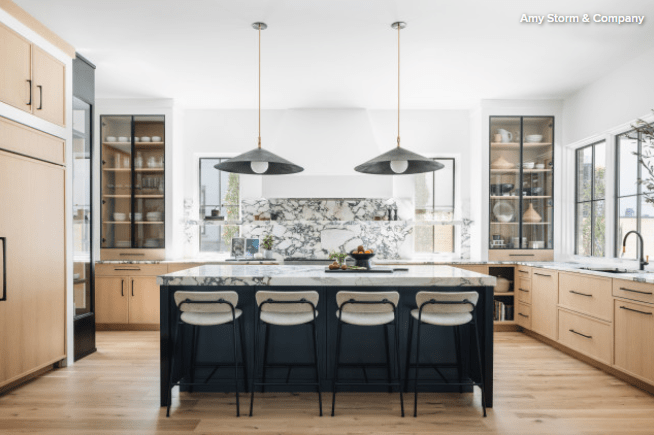
4. White, Wood and Black Metal

Homeowners’ request. “Our clients are passionate about nutrition, organization and cooking, so the kitchen is a special place in their home for them to exercise their passions,” designer Kelsey Demetralis says. “They wanted to create a functional and thoughtful space that reflected their personalities. The floor plan forms an open kitchen layout with a visual and functional connection to the butler’s pantry, which is more of the workhorse and keeps the mess behind the scenes.”

Color and material combo. Rift-sawn white oak cabinets in a custom stain. Black island with blue undertones (Railings by Farrow & Ball). White walls, plaster hood and glass-front cabinets (White Heron by Benjamin Moore). Black powder-coated metal accents. Natural oak flooring. Red Vein Calacatta marble backsplash, countertops and shelf. “The driving force of the kitchen design is the stunning, exotic marble slabs,” Demetralis says. “Its application was simple, but also the piece that gave us the most dramatic impact.”

Other special features. “We all agreed the island needed some metal detailing to tie in with the rest of the kitchen design, so we added black metal legs and applied them against the black painted island, creating texture and depth,” Demetralis says.

Designer tip. “Mix in personal and found pieces to create a comfortable yet refined space that really reflects you,” Demetralis says. “Don’t be afraid of mixing the old with the new. There is nothing better than stepping into your home and feeling like it is truly a representation of you and your life.”

“Uh-oh” moment. “One tough detail that took a lot of thinking, site meetings and collaboration was the stone shelf across the windows,” Demetralis says. “It took a combination of many vendors to make sure the sizing was right, placed at a perfect height for the client, had enough support to function correctly and still looked pretty from the front and back since it spanned windows. Talking through details on site makes all the difference, and getting everyone in the room 9 out of 10 times is the way to create a solution and ensure everyone is on the same page. It saves everyone time and money.”

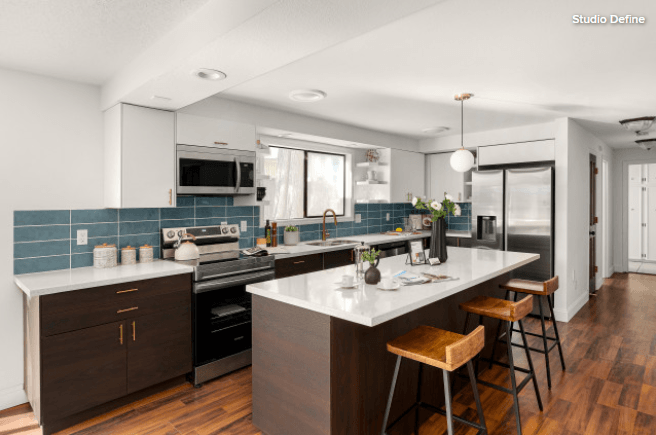
5. White, Dark Wood, Blue and Brass

Homeowners’ request. “The homeowners wanted a home with a Portland-hip outdoorsy style with some midcentury modern flair,” designer Victoria Chen says. “They wanted a mature yet fun look.”

Color and material combo. Dark brown ash lower cabinets. Sleek white uppers. Blue backsplash tile. Brass hardware, faucet and lighting. Black details. “We went for a white base to brighten up the space but added wood texture, unique color tones and calming pop of colors to the mix to create an interesting, fun design,” Chen says. “The darker lower cabinets created a sense of grounding and tranquillity. And the white upper cabinets and countertops reflected more light into the space to give a more open and spacious perspective.”

Designer tip. “Think about flow and function first,” Chen says. “A design should be functional and support the lifestyle of the owners. Then, on top of that, add color, style and everything that’s pretty.”


This article was originally published on houzz.com.

bright blue kitchen

With residents of cold regions experiencing or preparing for snow, plus all the holidays, December is a busy month. But with a little preparation (and some quiet time), you can savor the best of the season, whether it’s winter walks or hot cocoa. Check off these tasks for a less hectic, more harmonious month.

Things to Check Off Your List in an Hour or Less

Disconnect hoses. If it freezes in winter where you live, now is the time to shut off the water supply to your outdoor faucets if you haven’t done so yet. After shutting off the water, turn on the faucets outside to allow any water left to drain out. Then disconnect garden hoses, drain the water and roll them up to store indoors until spring.

Keep an eye on trees. A buildup of heavy snow on tree limbs can make them more prone to breaking. Brush snow off tree limbs after each big snowfall, using a broom to extend your reach. If a limb does fall, have it removed as soon as the weather permits.

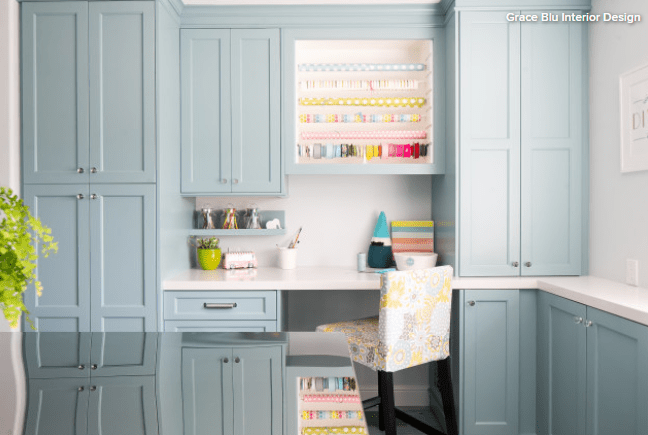
Set up a gift-wrapping station. Stock up on wrapping paper, plain boxes, ribbons, gift tags and tape, and store everything in an easily accessible spot near a work surface.

Having all your supplies ready to go will make it much more appealing to wrap gifts as soon as you buy them — instead of waiting until the last moment for a marathon wrapping session.

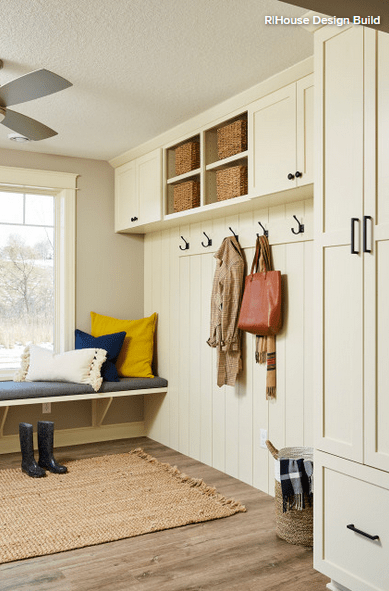
Make space for winter coats, boots and scarves. With winter weather come bulky coats, boots and all sorts of mittens and scarves that seem to multiply when you’re not looking.

Clear out the closet nearest your main entrance to make room for those extra winter layers, or supplement a hall with coat hooks and a boot tray.

Tackle These Tasks Over a Weekend

Put up outdoor holiday decor.
Dig out those Christmas lights early in the month so that you have ample time to test strands and replace nonworking ones before the holidays. Hang exterior lights and wreaths, being sure to use only exterior-rated lights, and plug them in safely in an outdoor outlet.

Add winter evergreens to outdoor spaces. Try boxwood in containers decked out with twinkling lights. Living Christmas trees and evergreen wreaths are also good choices for the front porch.

Simplify your holiday. If you tend to feel overwhelmed at this time of year, take a timeout to set some intentions for your holiday season. Focus on a few meaningful activities that you really enjoy, and give yourself permission to say, “No, thank you” to activities that stress you out.

Get ready for winter storms. Check the condition of your snow shovels, gloves and window scrapers, and replace as needed. Store snowy-weather supplies near the door where you can access them easily in a storm, and mark the sides of your driveway and other key places with reflective poles, to help the snow plowers see where to go. And even if it doesn’t snow where you live, keeping the pantry stocked with food, bottled water, candles and flashlights in case of power outages is always a good idea.

Block drafts. If you feel a draft, don’t just reach for another throw blanket — apply weatherstripping to the drafty area to warm up your house and save on your energy bill. If the cold air is getting in under a door, what you need is a door sweep. Usually made of hard plastic, a door sweep attaches to the bottom of your door, sealing off the gap that lets in cold air.

Maintenance and Extras to Budget for This Month

Spruce up indoor play areas. When you have kids at home, harsh winter weather can mean more playtime indoors. Stave off cries of “I’m bored!” with a spruced-up play space. A bit of reorganizing and a few simple purchases (like a giant roll of paper and fresh markers) can make your same old space feel like new.


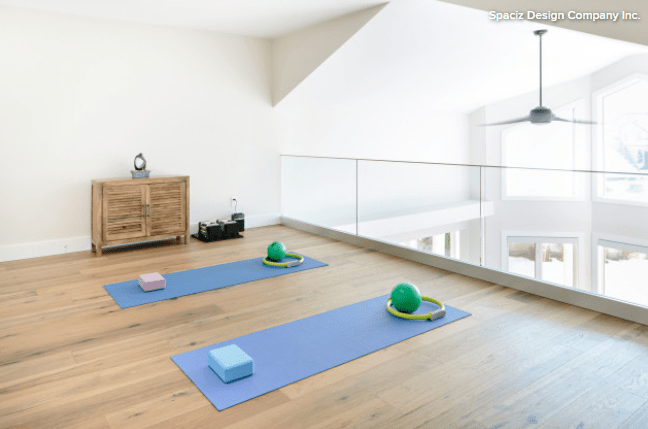
Carve out a space to find your Zen. What with family stress, packed schedules and world events, it’s especially important for our well-being to carve out moments for calm and reflection during this busy season. Create a personal retreat at home by clearing a space for yoga, meditation or relaxation. It certainly doesn’t have to be as grand as this one; it can simply be a space that’s slightly bigger than a mat, in any room. Just make the time to use it.


Have your chimney cleaned. If you haven’t done so yet, be sure to schedule a cleaning with a certified chimney cleaner before you light that first fire of the season. Creosote can build up in the chimney, increasing the risk of a house fire.

Update your emergency kit. Be prepared for power outages and other emergencies by making sure your house and car are outfitted with well-stocked emergency kits. The basics include bottled water, a hand-crank radio, a flashlight with extra batteries, a cell phone charger (hand-crank or battery-powered is best), food, blankets and a first-aid kit. At home, keep essential documents in one.

Plan for holiday home safety. A few simple precautions — such as illuminating the area around your house, locking doors and windows, and trimming bushes — can go a long way toward keeping your home safe.

And with night falling earlier this month, and many people headed out of town, it pays to be extra safety-conscious, whether or not you are going anywhere.


This article was originally published on houzz.com

rustic kitchen with modern stools and white cabinets

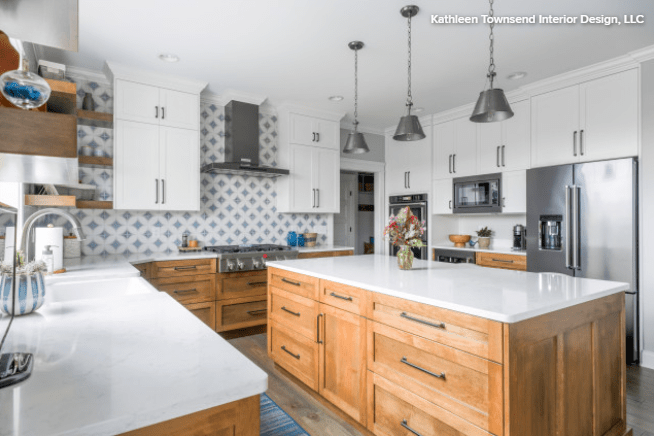
As retirement approached, the bucolic appeal of central Michigan was calling to this couple. So they decided to get out of the Saginaw, Michigan, suburbs and move to a cornfield-surrounded property they had fallen in love with. Though they had a very strong vision for the new home they were building there, they knew they needed some professional help with the interiors. Once the house was framed, they looked for an interior designer on Houzz and chose Kathleen Townsend. She helped bring their vision to life, incorporating the soft color palette and personalization they wanted in their forever home.

living room with kitchen in background
Photos by Brendan Ross

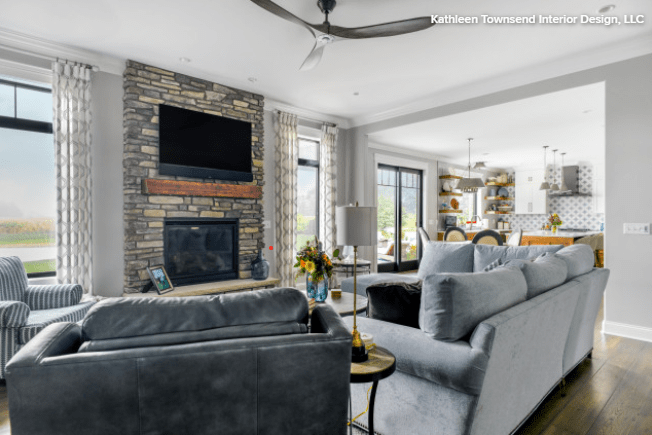
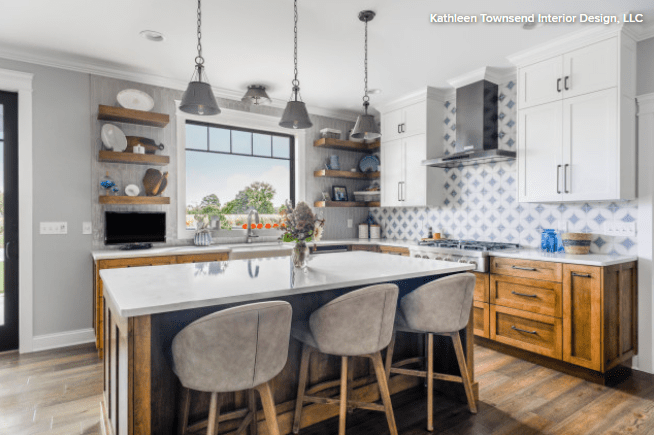
The homeowners had a definite vision of what they wanted, including soft grays and blues, two-tone cabinetry and open shelving to display their treasures. Townsend helped them finish and furnish their spaces in a way that tied the rooms together. Cohesiveness was important within the open floor plan.

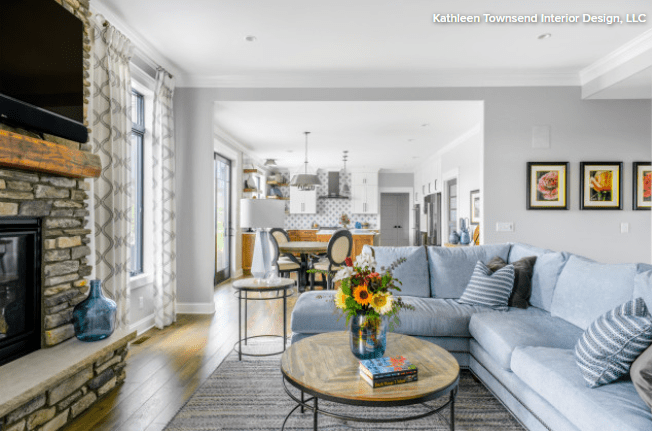
From the great room, the kitchen’s blue diamond backsplash wall provides a beautiful view. Townsend created cohesion between spaces with the color palette and finishes. For example, the walls in the great room, dining area and kitchen are all painted in Benjamin Moore’s Repose Gray. The backsplash plays off the blue sofa. The flooring throughout the house is engineered white oak.

dining room table in kitchen

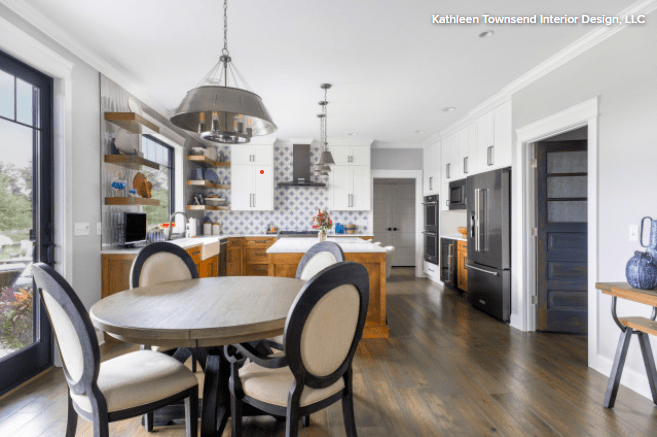
In planning their new home, the owners were looking forward to gathering with their adult children and their grandchildren. This area serves as their casual everyday eat-in area as well as the formal dining room. Extensions allow them to expand the table and make room for the whole family when needed. The chandelier is from the same collection as the pendant lights over the island, tying the two spaces together.

The door with the glass panels on the right is architectural salvage the homeowners found in Detroit. It opens to a walk-in pantry that includes open shelving and cabinetry that provide all the space needed for food storage. The couple replaced the original glass in the door with opaque glass to block the view of shelves full of food. The opening seen at the back of the photo leads to the mudroom.

rustic kitchen with modern stools and white cabinets

When Townsend was hired, the placement of the windows and doors had already been established. “They have these black-framed windows with transom frames at the top throughout the house and they are so pretty,” she says. The large window over the sink has lovely views out to the cornfields that surround the property.

Another must-have on the homeowners’ list was open shelving. “She wanted to be able to display heirloom items that had a lot of meaning to her and enjoy them every day. They are treasures to her,” Townsend says. The open shelves maintain a light feeling around the window. Upper cabinets would have closed in the window and blocked the view to the cornfields from the other spaces.

The window wall’s backsplash is composed of glass picket tiles in a soft gray. “If we’d continued the diamond tiles around this wall, they would have overwhelmed the kitchen,” Townsend says. Instead, the quieter glass tiles put the focus on Grandmother’s china and the view out the window.

rustic kitchen with white countertops and white cabinets

The two-tone cabinets are a mix of maple and white paint. The white upper cabinets fade into the background while the maple base cabinets add warmth. The hardware on all the cabinetry is aged bronze.

The island measures 6 by 3 feet, with seating on one side and storage on the other. The suede counter stools tuck neatly out of the way beneath the countertop. The countertops are Torquay quartz by Cambria, which has subtle marble-like veining. The quartz is low-maintenance and more durable than real marble.

The clients opted for blackened stainless steel for the appliances. These have a darker look than standard stainless steel. The light fixtures have an aged steel finish.

living room with gray couch in front of fireplace

The doors off the dining area lead directly out to the patio, making it easy for the couple to entertain outdoors.

patio with wicker furniture with stamped concrete

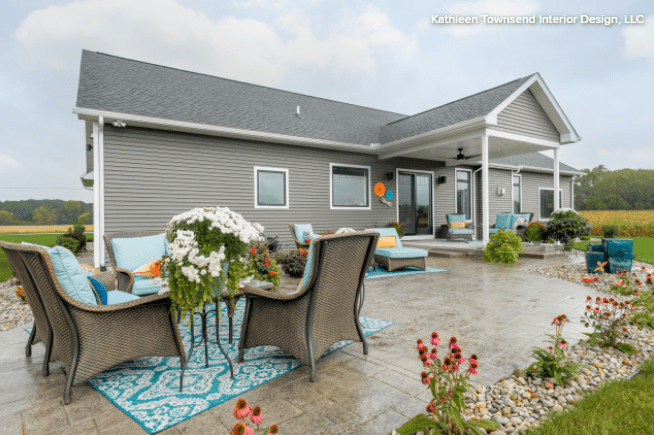
Here’s a look at the large patio, the porch and the relaxing rural surroundings.

“They just hosted a baby shower for one of their children a few weeks ago,” Townsend says. “They are so happy in their new home. While they continue working, their commutes are a bit longer, but it’s well worth it to them.”

This article was originally published on houzz.com

Fall landscape

Fall is the best time to garden, and it’s about time we realized this. Not only is cooler weather easier on new plants and tired bones, but planting in a spent garden with rain on the horizon also has advantages. Here’s more on why planting in fall can make spring gardens more robust than we might have imagined.

Cooler Weather Helps Plants and People

I confess from the get-go that I’m an autumn junkie. I love the cool mornings followed by warm afternoons and a return to coolness in the evenings. I love the leaf colors, which are so much more profound than those of flowers. I love the insects rushing to gather pollen and nectar to overwinter or migrate. I love the smell of decay after a rain shower. I love the first frost hanging on every leaf and stem. But I really love autumn for the gardening energy it provides — I’m not sweating 30 minutes into planting or dividing, and the soil is very workable, so I can go for hours.

Plants love fall, too. Their leaves aren’t stressed by scorching sun, and cooler temps lessen the demand for water from the roots. I’m a firm believer that fall-dug plants are more robust than spring- or summer-dug plants.

Less Watering Means Lower Maintenance

If you plant in spring or summer, more often than not you have to dutifully keep up with watering during those first few weeks or months. Constant observation of your new darlings gets tedious as the heat ramps ups.

When planting in fall, I water the plants in their pots a few hours before digging so they can soak up what they need, then I stick them in the ground and leave until forever. Now, I’m talking perennials here. For shrubs and trees, it’s good to thoroughly water the soil in the new hole to get it nice and tight around the new roots you’ve teased out from the root ball, and a warm day in January might be perfect for watering if it’s been a dry winter.

You Can Plant Later

Let’s say you buy a tree at 50 percent off before the nursery closes for winter in mid-October. Ideally, you’d plant it right away, but really you’re fine waiting several weeks, so feel free to go watch some football. I’m in USDA Zone 5, and we garden mavericks dig shrubs and trees into late November.

In fact, it might be easier on the trees once their leaves are gone. There’s less pressure to devote resources to keeping them alive, and all of their effort is dedicated to growing roots. That’s the benefit of fall digging for all plants: You’re helping them concentrate on roots, so when they come back in spring, they’re ready to put on more top growth in the form of lovely foliage and stunning blooms. If you plant in spring or summer, you have to wait an entire year to see those results.

planting plantsSmaller Sizes Make for Better Plants

This is a bit of a generalization, but overall you might as well save money and buy smaller plants — 3-inch pots and plugs, trees in gallon containers and more. With a smaller root zone that, hopefully, isn’t spun round and round the root ball, you’ll get a plant that will suffer less from transplant shock and become established as fast as, or faster than, a larger specimen.

I love the small pots pictured here. It’s easier to tease out the roots so they make contact with the new soil in my garden, and they’re easier to haul around. After a few hard freezes, make sure you have a few inches of mulch tucked in around your plants to prevent frost heaving (if you live in an area where the ground freezes).


backyard pagoda


It’s Easier to See Where You Need to Add Plants

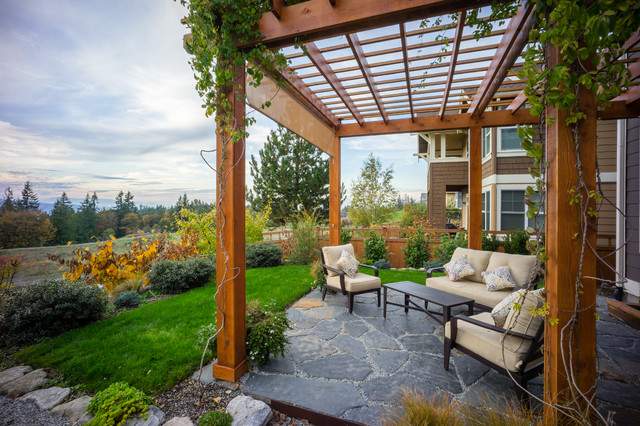
Of course, you should leave your plants up for winter to help the garden insulate itself, capture moisture and protect overwintering pollinators, but it also will help you see where the gaps between plants are. Maybe a grass is needed in an open spot, or you realize you want some spring blooms to pop in one bed. Now’s the time to make those changes while the mosquitoes and leaves are gone. You can actually see the ground and get to it through the skeletons of the year’s growth.

How long into fall that you can plant obviously varies by location: In the northern regions or at higher elevations, you’ll want to be digging in August and September, whereas toward the coasts and the southern regions you might be able to go into December.

Over the years I’ve come to do most of my planting and dividing in fall, so that when spring comes, all I have to do is go outside and enjoy the fruits of my autumn labor.

The plants will thank you with more robust root systems and hopefully a show worth savoring from the nearest garden bench.

Little girl listening to headphones

Outfit your kids with smart technology to help them succeed this year!


Depending on your perspective, this is either the worst or more wonderful time of the year. While parents celebrate the return to school and kids lament the loss of summer vacation, you can make everyone’s transition a bit easier, thanks to smart technology.From empowering backpacks and intercom alarm clocks to the optimal headphones and GPS-tracking wristwatches, we’ve identified the gadgets you should grab before sending the young ones back to the classroom.

Amazon Echo Dot (4th Gen)

amazon echoAny parent can tell you that the toughest transition for back-to-school can be the first of the day—rousing your child early after a summer of sleeping-in. Amazon Echo Dot is here to make it easier. Not only is the device a top-of-the-line smart speaker that your child will enjoy, but it operates as an ideal alarm clock. The spherical Dot features the time emblazoned on front and can be easily set to sound an alarm (or song, chosen by your child) at the time they need to be up (chosen by you, the parent). Better still, thanks to Echo’s Drop In feature, you can turn the Dot into an intercom, allowing you to communicate with your kid from your phone, from the kitchen, instead of trudging upstairs a dozen times to cajole them out of bed.

The Amazon Echo Dot (4th Gen) is available for $49.

PuroQuiets Headphones

pink headphonesOf course, you won’t be the only one supplying your child with technology—nearly all classrooms now incorporate some computer or tablet work throughout the day, and for everyone’s sanity, that means headphones are needed. Check out the PuroQuiets from Puro Sound Labs. These sturdy headphones feature Bluetooth technology, allowing your student to easily connect to whatever device they need to use, and should they forget to charge their Quiets—a common occurrence with kids and technology—the headphones also come with a 3.5mm audio cable for an easy, manual connection. As a bonus, the PuroQuiets include noise canceling technology (hence the “Quiets” name), allowing your student to focus on the task in front of them and not the latest gossip from their seatmate.

PuroQuiets Headphones are available in three colors for $129.

Nordace Siena Smart Backpack

green backpackStylish and smart. Give your young one a leg up with the Siena Smart Backpack from Nordace. This fine-looking portable locker, which is available in nine colors, comes equipped with a built-in USB charging port, so your student will never have an excuse for, say, having their school headphones uncharged. In addition to an energy source, the Siena features a dedicated, padded and secure sleeve to house a 15.6-inch laptop, tablet or similar, ensuring that their essential school technology is safe throughout the rigors of day.

Nordace Siena Smart Backpack is available for $109.

Xplora x5 Play Smart Watch

smart watchKeeping track—and in touch with—your little ones can be a tough proposition, especially when they are too young for a cell phone. Fortunately there is the X5 Play Smart Watch from Xplora. This intelligent wearable not only provides parents with a GPS location of their child (allowing you to see exactly how close the school bus is to home), but also allows pre-approved numbers to send texts or calls to the device, giving parents a chance to offer encouraging words or important messages (like, clean your room when you get home) throughout the day.

The Xplora x5 Play Smart Watch is available for $149.

This article was originally published on Mansion Global.